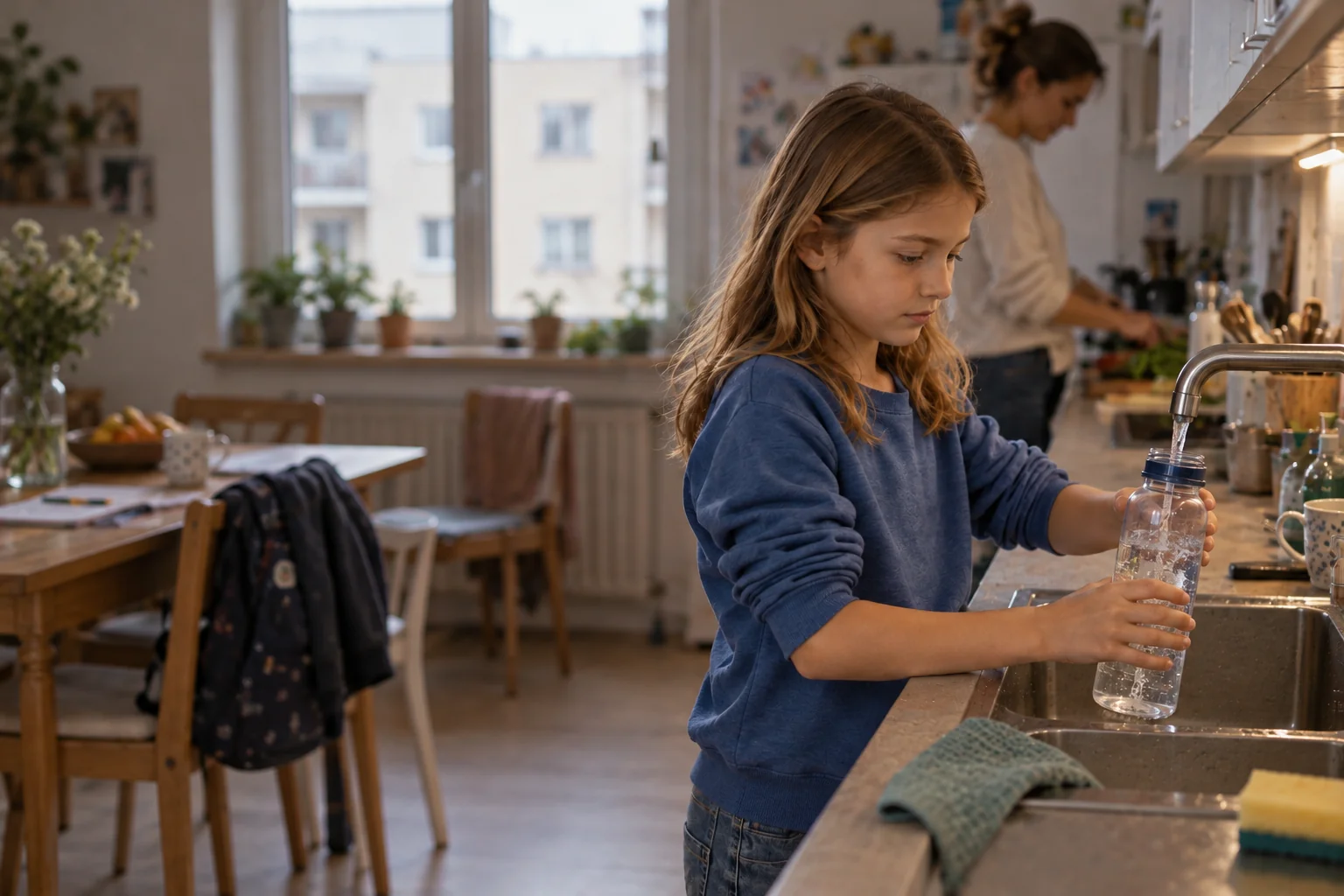
A helpful guide, not a daily drinking test
- Age-based drink reference values for children aged 4–12 are roughly 0.9 to 1.2 litres per day. Weather, activity and individual circumstances affect needs.
- Drinks and total water intake are different: food supplies water too. Figures from different tables cannot always be compared directly.
- Offer water regularly, keep it accessible and plan breaks. A particular bottle does not need to be emptied under pressure.
How much should children drink at different ages?
The German Nutrition Society, DGE, gives the following daily reference values for water supplied by drinks under ordinary conditions. They refer to drinks across the whole day, not an extra amount on top of water already consumed.
- Ages 4 to under 7: 940 millilitres, or roughly 0.9 litres.
- Ages 7 to under 10: 970 millilitres, or roughly 1 litre.
- Ages 10 to under 13: 1170 millilitres, or roughly 1.2 litres.
These are guides for healthy children, not precise targets to enforce. Switzerland’s nutrition disk for ages 4–12 expresses its everyday advice as four to five glasses of water. The amount naturally depends on the size of the glass.
Our water knowledge entry explains the basics. If a clinician has specified a fluid amount, follow that individual advice.
Why some tables show much higher figures
Food also supplies water: vegetables, fruit, yoghurt and soup are examples. The body produces some water during metabolism too. A table showing total water intake therefore includes more than the contents of a drinking bottle.
When online numbers differ, read the heading first. Does it refer to drinks, drinks plus food, or total water? Check the age group as well. An adult figure is not a target for a child.
A simpler everyday question may be more useful: when can my child actually get a drink? A full bottle may mean the lid is hard to open, it stays inside a bag or the child dislikes using the school toilets.
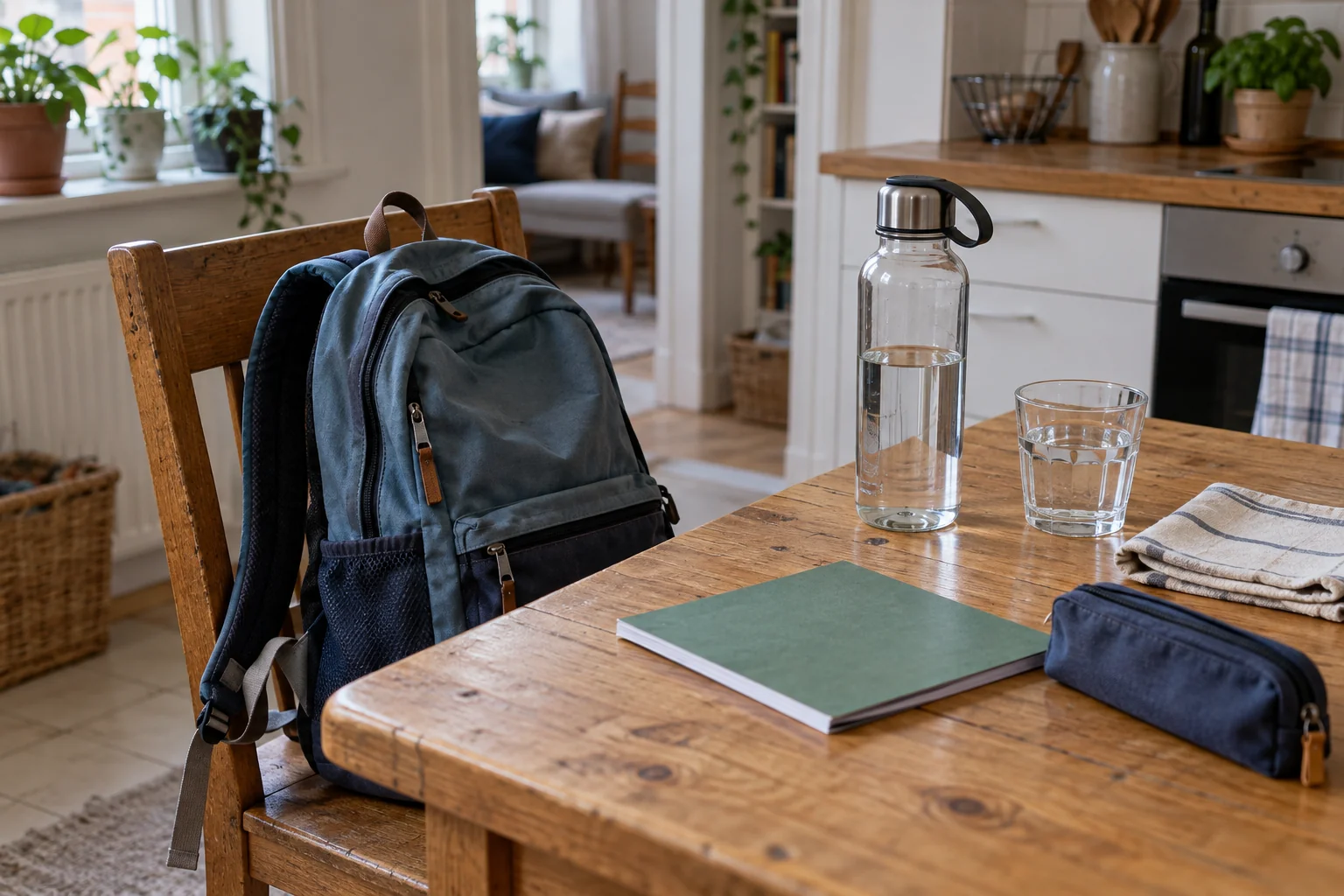
Do not turn one figure into two targets
If guidance gives about one litre of drinks, it does not mean an extra litre on top of breakfast drinks and a school bottle. Consider the whole day and adjust to the circumstances.
Which drinks work for everyday thirst?
Water is the simplest option. Depending on preference, that may be tap water or mineral water, still or sparkling. Swiss tap water is generally a good choice; follow any local water-quality notices. Unsweetened herbal or fruit tea can offer variety.
Juice, squash and sweet drinks should not routinely displace water. Milk contributes fluid but also belongs in the diet as a nutrient-containing food, rather than being the default thirst quencher. Caffeinated energy drinks are unsuitable for children.
If water is rarely offered at present, begin with one occasion: a glass with dinner or an accessible bottle during play. You do not have to change every habit at once. Our article about sugar puts sweet drinks into context.
Build a routine that works at school too
Spend a day noticing together when drinking is easy and when it gets forgotten. This is observation, not surveillance. Ask your child whether water can be refilled and when drinking breaks are possible.
- Morning: offer a drink with breakfast.
- On the move: choose a bottle your child can open and pack safely.
- At school: find out when children can drink and where bottles can be refilled.
- Afternoon: offer a pause after the journey home, play or training.
A 500-millilitre bottle is a container, not a whole day’s supply. Drinks at home count too. Equally, a bottle still full in the afternoon need not be emptied immediately. Create regular opportunities instead of an evening catch-up competition.
Try tomorrow: find the obstacle
Look at the routine before making a new rule. A simpler lid, a fixed place on the table or permission to refill may be enough. Choose one small change together and see after a few days whether it helps.
What changes with heat, sport or illness?
Warm weather, exercise and heavy sweating often increase fluid needs. Take enough water on outings and plan places to refill. One fixed extra amount for every child and every hour of sport would be too simplistic.
Fever, vomiting and diarrhoea need particular attention. Significant fluid loss may require an appropriate oral rehydration solution; seek advice from a clinician or pharmacist. Sports drinks are not an equivalent replacement.
Much less urine, a dry mouth and unusual tiredness can be warning signs. Seek prompt medical help with persistent vomiting, very little fluid intake or unusual drowsiness. A child who is difficult to wake or appears seriously ill needs emergency help.
Common questions about children’s drinks
Do all children need two litres of drinks?
Do soup and fruit count?
What if the bottle comes home full?
Is drinking a lot always harmless?
How much should children drink each day?
DGE reference values are approximately 0.9 litres of drinks for ages 4–6, 1 litre for ages 7–9 and 1.2 litres for ages 10–12. Heat and activity may increase needs. Food provides additional water.
Sources & context
Read the underlying references here. Our everyday suggestions are examples, not calculated nutrition plans.
- DGE · Wasser ↗
Reference values distinguish drinks, food and total water.
- SGE · Schweizer Ernährungsscheibe ↗
Everyday guidance for children aged 4–12.
- BZfE · Gesund essen mit Kindern ↗
Suitable drinks and opportunities to drink.
- NHS · Dehydration ↗
Warning signs and seeking help for possible dehydration.
- NHS · Excessive thirst ↗
Persistent excessive thirst needs separate assessment.
References checked: 13 October 2026. General nutrition information; not evidence of a Pureli product effect or a replacement for individual medical advice.