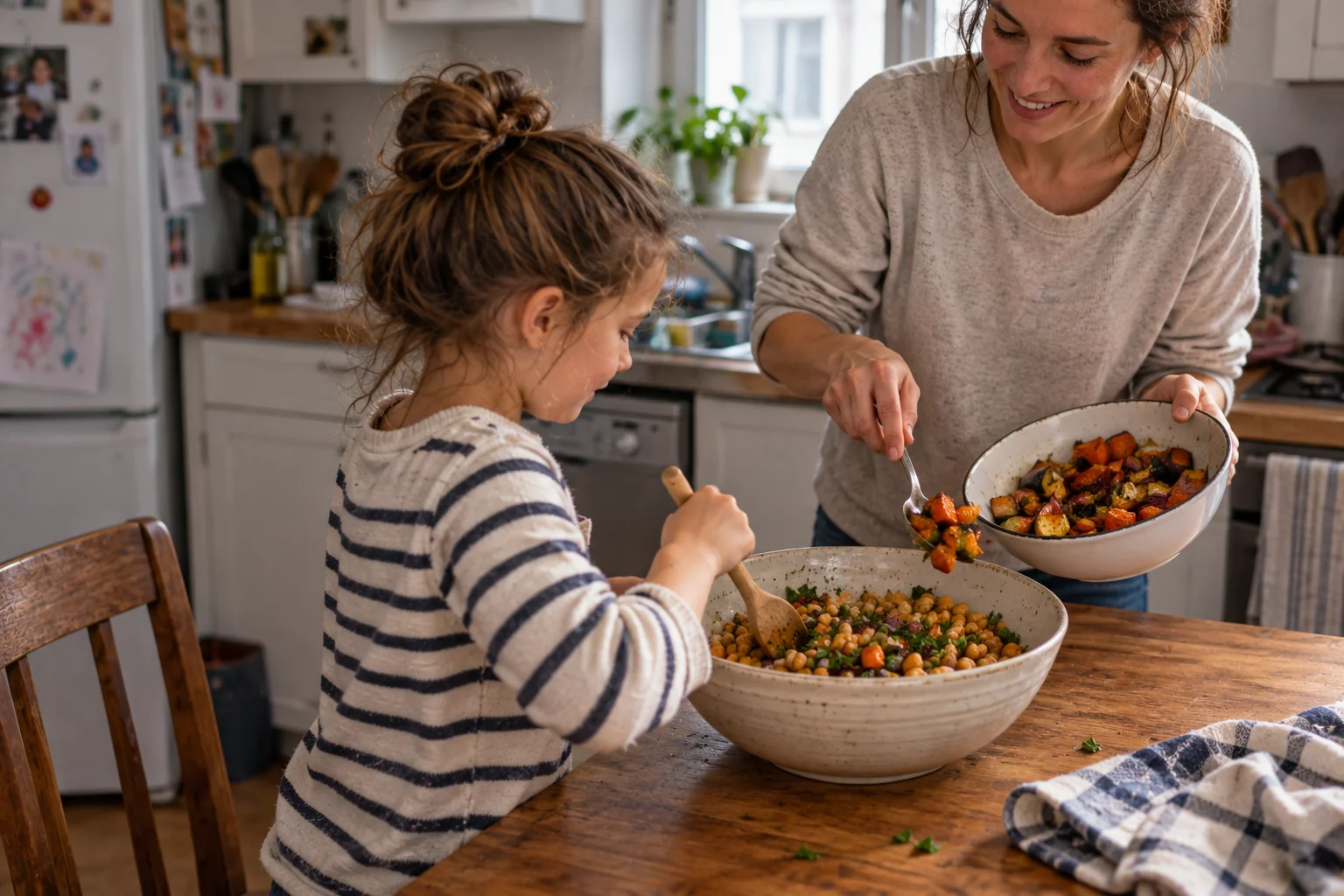
Replace thoughtfully rather than simply remove
- A well-planned vegetarian diet including eggs and dairy can be suitable for children. What they actually eat regularly matters.
- Pulses, tofu, grains, vegetables and suitable animal foods contribute different things. Cheese alone cannot replace that variety.
- Vegan eating is different. It needs separate professional consideration, especially for young children, and a reliable vitamin B12 supply.
Vegetarian does not automatically mean balanced
It may start with a sentence at dinner: “I don’t want to eat animals any more.” Take the wish seriously and look together at meals that already work. Potatoes, bread and pasta can remain familiar; begin by changing what goes alongside them.
Here, vegetarian means an ovo-lacto-vegetarian diet: no meat or fish, but including eggs and dairy. A label alone does not make it balanced. A vegetarian menu can still be very narrow if it consists mainly of white pasta, cheese and sweets.
These examples are aimed at families with roughly nursery- and school-age children. They are not a guide to introducing solids or an individual meal plan for a child with a medical condition.
Think of a familiar meal in four parts
Rather than searching for a special recipe every day, adapt meals you already enjoy. Ask what provides a satisfying base, what contributes protein, which vegetable or fruit fits and what fat is used for cooking or flavour.
- Pasta: a mild lentil or bean sauce, vegetables and a little oil.
- Rice: tofu or egg with cooked peas and carrots; components can stay separate.
- A bread-based meal: bean spread or egg, preferred vegetables and an appropriate dairy food elsewhere in the day.
Every meal does not need to supply every nutrient in full. These building blocks help turn “no meat” into a complete eating occasion. Our protein entry explains what different sources contribute.
Cheese is not a complete replacement for meat
Cheese can provide protein and calcium, but it does not automatically fulfil every role of other foods. Rotate between pulses, tofu, eggs, dairy and grains where these fit your family’s diet.
Which nutrients deserve deliberate attention?
Iron and vitamin B12 deserve attention in vegetarian diets. Pair plant iron with vegetables or fruit containing vitamin C. Eggs and dairy can provide B12; whether intake is sufficient depends on the foods and amounts actually eaten.
Calcium, iodine, zinc, vitamin D and omega-3 fats also belong in the planning picture. This does not mean every vegetarian child has a deficiency or needs a shelf full of supplements. It means avoiding the removal of whole food groups without a suitable replacement.
An oat drink and milk do not automatically have the same composition. Protein content and fortification vary between alternatives. If several animal-food groups are excluded, review replacements with a qualified dietitian. Our nutrient knowledge library explains the foundations.
What if your child does not like pulses?
Start with a short list of foods that already work: an egg dish, porridge, tofu cubes, yoghurt with fruit or a bread spread. Add one new option rather than changing the entire week.
Some children prefer a smooth lentil sauce; others like separate chickpeas. A small, visible tasting portion beside familiar ingredients may feel more manageable than a fully mixed plate. Offer food without turning a refusal into a lecture about nutrients.
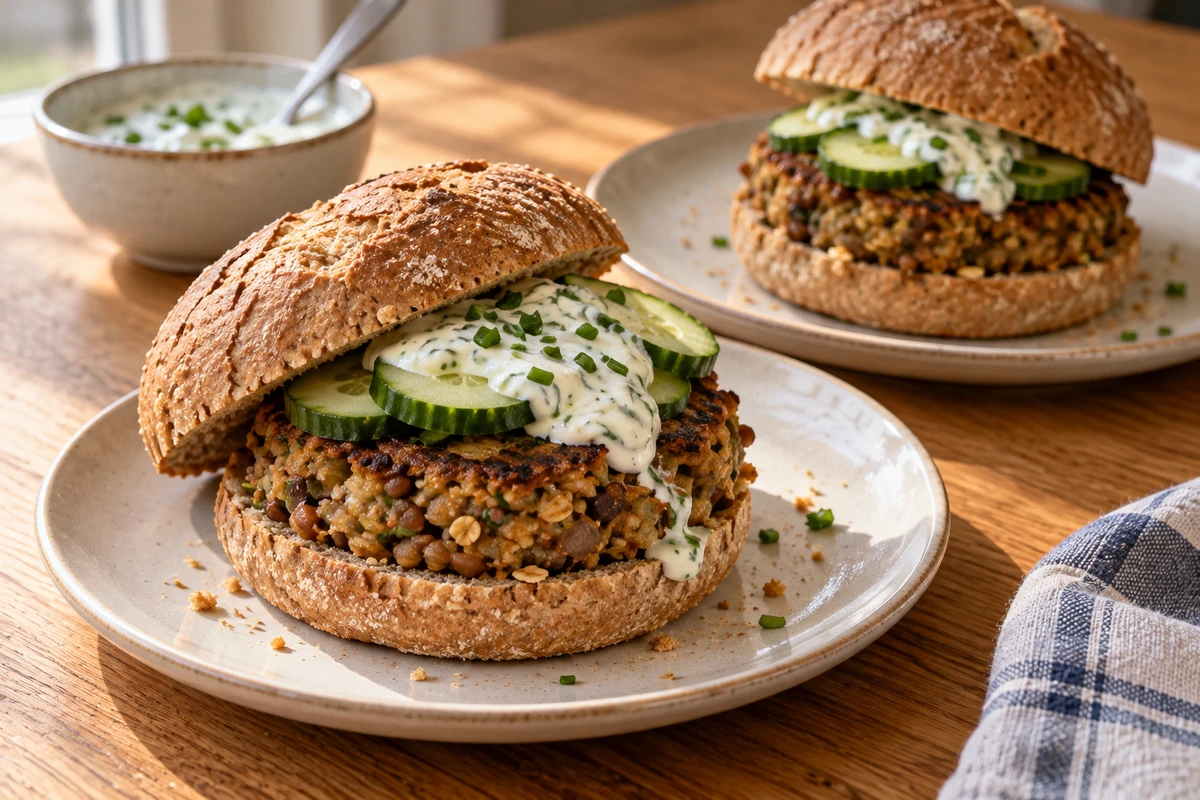
Our lentil and oat burgers offer another way to serve the same ingredients. Make a specific arrangement with school or childcare too: what vegetarian main component is available when meat or fish is served? Taking only the side dish should not become the usual answer.
Begin with three familiar meals
Write down three family favourites. Choose a suitable vegetarian main component for each and let your child pick one version to try. Shop for those specific ingredients. A small repertoire is easier to use than starting from scratch every evening.
Vegetarian and vegan diets need different planning
Vegan diets also exclude eggs and dairy. Vitamin B12 must be reliably supplemented; naturally occurring plant foods are not a dependable source. The Swiss food-safety authority, the FSVO, does not recommend a vegan diet for infants and toddlers. Families choosing it nevertheless need ongoing medical and dietetic support.
For older children too, removing several food groups is a sensible time to seek professional advice. This is particularly relevant with allergies, a very limited food range or concerns about growth and development.
Bring a few ordinary eating situations to a consultation: breakfast at home, lunch in childcare, dinner and regular snacks. This provides a more useful starting point than saying “we eat healthily”. The aim is a workable selection that the child genuinely eats.
Common questions about vegetarian diets for children
Can a child grow up healthily without meat?
Does my child need a meat substitute every day?
Is vegan simply vegetarian without milk and eggs?
What matters when a child is very selective?
How do you plan vegetarian meals for children?
Include a suitable protein food, a satisfying starchy base, vegetables or fruit and fat. Give particular attention to iron and B12 while considering the whole diet. The plan needs to fit both the child and everyday family life.
Sources & context
Read the underlying references here. Our everyday suggestions are examples, not calculated nutrition plans.
- NHS · The vegetarian diet ↗
Variety, iron and B12 in vegetarian diets.
- BLV / FSVO · Säuglinge und Kleinkinder ↗
Swiss guidance and resources for vegetarian and vegan feeding in early childhood.
- BLV / FSVO · Vegetarische und vegane Ernährung ↗
Distinguishing dietary patterns; adult guidance cannot simply be applied to children.
- BZfE · Gesund essen mit Kindern ↗
Practical meal planning and childhood nutrition.
- SACN / COT · Plant-based drinks ↗
Composition of plant-based drinks; alternatives are not automatically equivalent.
References checked: 13 October 2026. General nutrition information; not evidence of a Pureli product effect or a replacement for individual medical advice.