Understand the cupboard rather than condemn it
- Processing is not automatically a disadvantage. Freezing, cooking and preserving can make foods practical for everyday use.
- NOVA’s ultra-processed category describes processing and formulation. It is not the same as a complete assessment of nutritional value.
- Ask three questions: what is in it, what does it contribute to the meal and how often does it take a leading role?
What does ultra-processed actually mean?
The term often describes industrially formulated products placed in NOVA’s ultra-processed category. It concerns processing and formulation, not packaging alone or a single nutrient value. Information available in a shop does not always allow a clear classification.
A packet of frozen vegetables is therefore not automatically comparable to a sweet snack bar. Bread, yoghurt and other everyday foods can also fall into different categories depending on their formulation. “Made in a factory” alone does not answer whether something fits your family’s meals.
A practical approach is useful: the category may prompt a closer look, but it cannot replace considering the particular food and your overall eating pattern.
What does research show, and what remains uncertain?
The UK Scientific Advisory Committee on Nutrition, SACN, reports associations between high consumption of ultra-processed foods and less favourable health outcomes. Uncertainties remain, including product classification and other influences on health. Much of the evidence comes from observational studies.
A controlled study of 20 adults found higher energy intake during an ultra-processed diet than during the comparison diet. Each phase lasted two weeks. This is an important finding, but it does not prove that a particular children’s product causes illness or that every child would respond in the same way.
Neither panic nor indifference is helpful. Look for patterns: do snacks and sweet drinks regularly replace meals? Are vegetables, fruit, pulses or other varied components missing? Those are concrete places to begin.
Packaged does not automatically mean ultra-processed
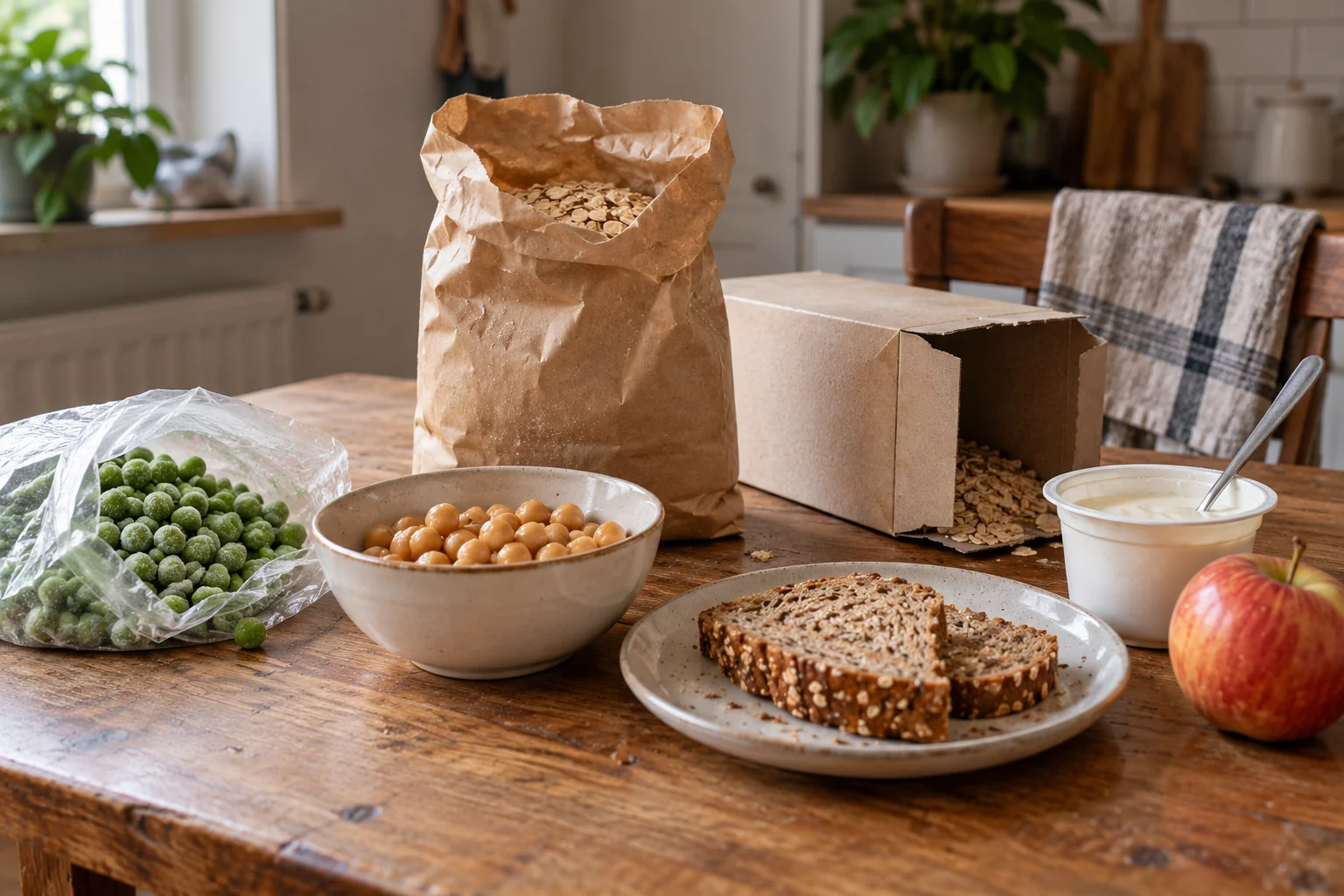
Plain frozen peas, oats and tinned pulses illustrate why packaging alone tells you little. Look at the particular product and how you use it, rather than ruling out entire supermarket aisles.
Three questions for a useful comparison in the shop
Turn over two similar products and start with their ingredients. These are generally listed in descending order of weight at manufacture. The order provides clues, although it does not give the amount of every ingredient.
- What is the base: oats, milk, pulses, or mainly sugar and fat?
- How do similar products compare per 100 grams? Depending on the food, consider sugars, salt, saturated fat and fibre where listed.
- What job does it have in the meal? A dessert, a protein component and a starchy base are different things.
The “of which sugars” figure includes naturally occurring sugars, such as those in milk. It does not show added sugar alone. A short ingredient list is not a universal quality mark either: sugar itself has just one ingredient. Our sugar article explains more.
Build on convenience foods instead of making everything from scratch
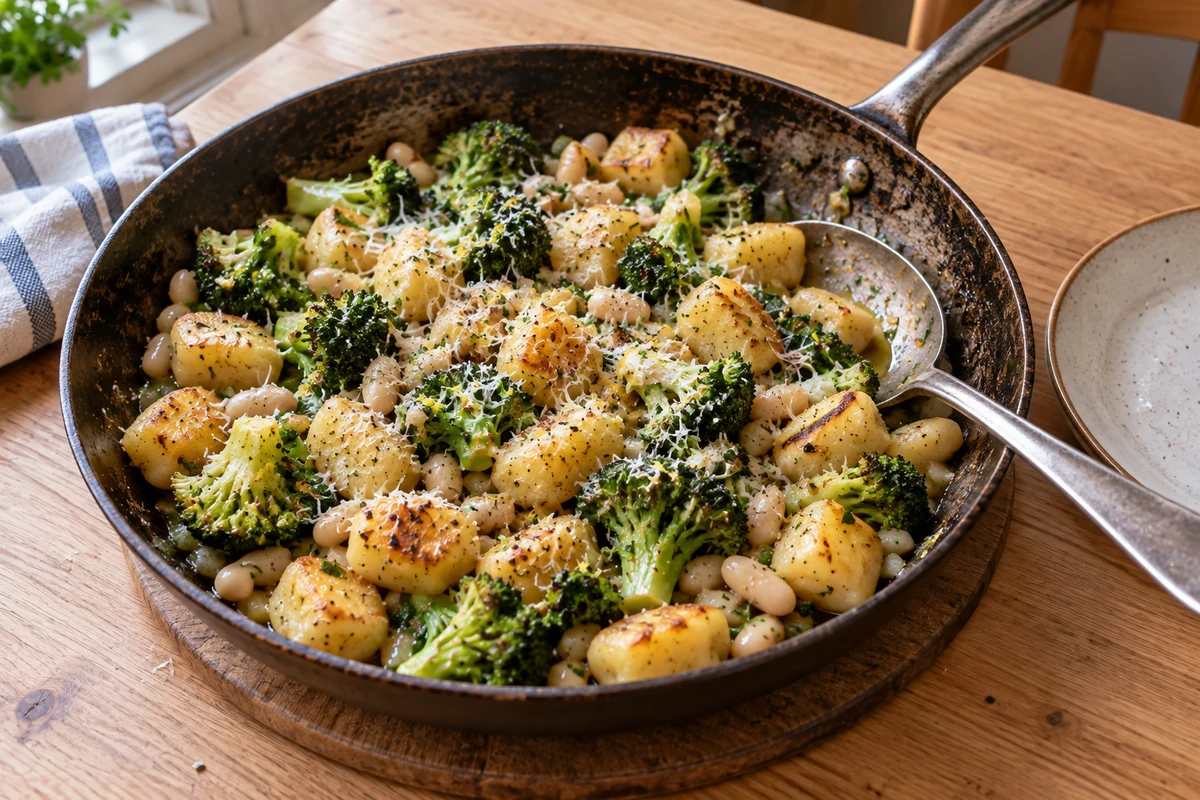
On a busy weekday, cooked pulses, frozen vegetables or a simple prepared product can save time. Consider what else would make a useful meal. Ready-made gnocchi could be paired with white beans and broccoli; a simple tomato sauce could be served with extra vegetables.
Our family kitchen has broccoli and white bean gnocchi as one practical example. It shows how convenient ingredients can work together. It is not an antidote to other foods.
Choose one recurring situation: breakfast before school, a snack on the move or a quick dinner. A reliable option there can make life easier than trying to reinvent your entire shopping list in one week.
A five-minute cupboard check
Choose three products you use often. Write down what you need them for and what you serve with them. Next time you shop, compare just one with a similar alternative. Keep what works: convenience and balanced meals can go together.
How to talk about it with children
Food does not need to pass a moral test at the table. Explain differences instead: some things are everyday choices, others are occasional. One food can be convenient and contribute useful nutrients; another may mainly be something to enjoy.
Invite children into a small comparison without making them label inspectors. What do they like about the current product: crunch, sweetness, texture or convenience? A workable alternative does not have to abandon every one of those features.
If eating becomes a constant worry or more food groups are being excluded, tighter control is not automatically the answer. Seek help with relaxed, adequate eating. Our knowledge library explains nutrient functions without turning them into product promises.
Common questions about ultra-processed foods
Are all ready meals unhealthy?
Does a long ingredient list mean ultra-processed?
Must children avoid these foods completely?
Is an organic or children’s product automatically better?
How can parents choose packaged foods sensibly?
Compare similar products using ingredients and nutrition information, consider their role in a meal and look at how frequently they are eaten. Processing level adds information, but it is not a complete verdict on one food.
Sources & context
Read the underlying references here. Our everyday suggestions are examples, not calculated nutrition plans.
- SACN · Processed foods: evidence update (2025) ↗
State of the evidence and limitations of classification.
- Hall et al. · Controlled feeding trial (2019) ↗
20 adults, two dietary phases of two weeks each; not a study in children.
- BLV / FSVO · Lebensmitteletikette ↗
Ingredient order and nutrition declarations.
- SACN · Processed foods and health (2023) ↗
NOVA and nutrient profiles are different ways of assessing food.
References checked: 13 October 2026. General nutrition information; not evidence of a Pureli product effect or a replacement for individual medical advice.